


A guide to menopause and bone density, for women in their 40s, 50s and 60s.
Nobody told you it was happening.
Nothing has hurt. Nothing has broken. There has been no warning sign, no obvious symptom, no moment where your body announced what was changing.
And yet, somewhere inside you, silently, gradually, and faster than at any other point in your adult life, your bones are losing density.
You are not imagining the shift. And it is not a personal failing.
What is happening inside your body during the menopause transition is specific, measurable, and something you can actually do something about, once you understand it.
Almost no woman is told this clearly. Here is the version we wish someone had given us.
What menopause does to bone density
Oestrogen does not just regulate the reproductive system. It is one of the most important hormones for protecting bone.
For decades, while oestrogen is doing its job, your skeleton is being quietly maintained, built up faster than it breaks down.
When oestrogen begins to decline, that protection lifts. The balance tips. And what your bones lose, they no longer fully rebuild.
In the first five to seven years after menopause begins, women can lose up to twenty percent of their bone density.
“By the time a wrist breaks in the kitchen at sixty, the process started fifteen years earlier.”
This is the part nobody tells you. And it is the reason most women find out too late.
Why the old advice is making it worse
When something feels off, the instinct is to do what has always worked before. More cardio. Eat less. Try harder.
In your thirties, that worked. The body had oestrogen and metabolic flexibility on its side.
That margin is gone now.
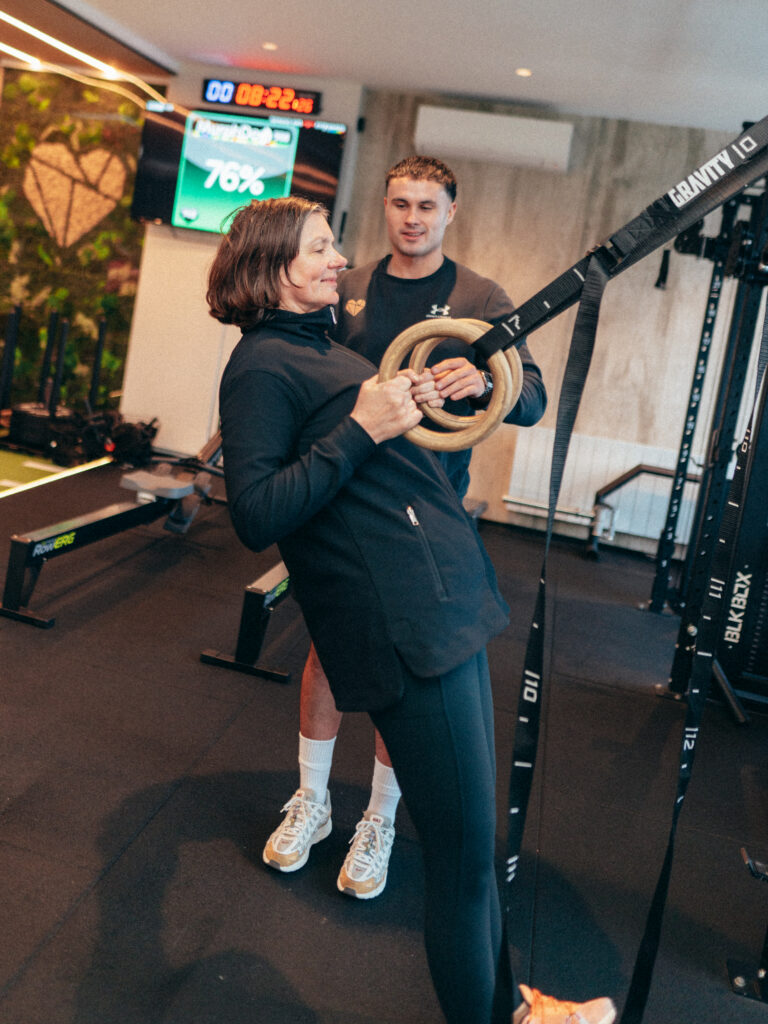
The same things that once kept you in shape, long runs, low-calorie diets, hours of repetitive cardio, light dumbbells, do almost nothing for bone. Some of it actively makes the situation worse.
“You have not been failing. You have been doing the wrong thing, because the right thing was never explained.”
That is the sentence we wish every woman in midlife had been told ten years earlier.
The one thing that actually protects bone
Bone responds to one thing.
Force.
When you load a bone, when you place real, meaningful weight through it, repeatedly, the bone responds by getting denser and stronger. This is true at twenty, at fifty, and at seventy.
The most reliable way to load bone is resistance training. Lifting weights. Squats, deadlifts, presses, rows.
Two to three sessions a week is enough. The weight has to be challenging. Light weights repeated for thirty minutes will not do it. The body needs a reason to adapt. Comfortable does not count as a reason.
It is the most replicated finding in women’s health research of the last thirty years. And it is the thing women in midlife are still rarely told.
What to focus on, starting this week
Three things. In order of importance.
Lift heavy, two to three times a week. Properly heavy. The kind of weight that makes you breathe out hard on the last rep. The kind women have been told for thirty years not to touch.
Eat enough protein. A palm-sized portion at every meal. Most women in midlife are eating significantly less than they need.
Stay impactful. Bone responds to impact as well as load. Brisk walking, hiking, light skipping. The body needs to feel its own weight regularly.
You do not need to do everything at once. But you do need to start.
A final word
You have not lost control of your body.
You have been given outdated instructions for a body that has moved on.
The women we coach through menopause describe the shift as the strange relief of finally being told the truth. Once the right things are loaded, the bones, the muscle, the protein, the rest, the body responds.
The next forty years stop being something to brace against, and start being something to build.
If any of this resonates, the easiest next step is a 15-minute chat with one of our coaches.
No pressure, no pitch, just a conversation about women’s fitness where you are and how personal training and nutrition could actually help.